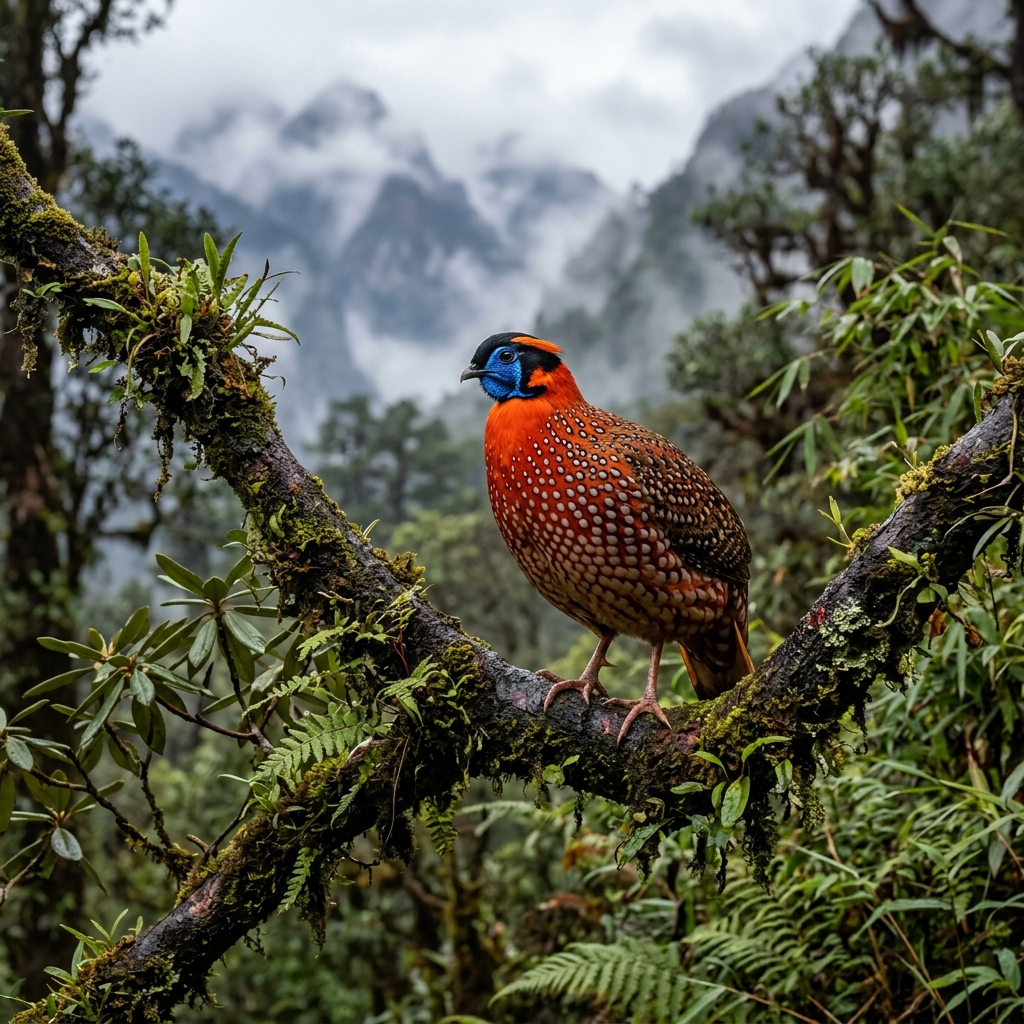
Eastern Himalaya Birding Expedition
Overview
The Eastern Himalayas represent one of the most biodiverse hot-spots on the planet, making it an absolute mecca for birdwatchers and wildlife photographers. This exhaustive 9-day expedition traverses varying altitudes—from tropical foothills to temperate alpine forests—maximizing the sheer diversity of avian species you will encounter.
Spanning across Northern Bengal and Arunachal Pradesh, this tour covers legendary birding grounds: the dense Mahananda Wildlife Sanctuary, the pristine Neora Valley, and the world-renowned Eaglenest Wildlife Sanctuary. Guided by top-tier local ornithologists, you will seek out some of Asia’s most elusive and spectacular birds, including the Rufous-necked Hornbill, Ward's Trogon, and the incredibly rare Bugun Liocichla. This is a specialized, immersive journey designed for passionate naturalists seeking the ultimate Himalayan birding checklist.
Day-by-Day Itinerary
Day 1: Arrival at Bagdogra & Mahananda Wildlife Sanctuary
- Morning: Arrive at Bagdogra Airport. You will be met by your birding guide and immediately transfer to a forest lodge near Mahananda Wildlife Sanctuary.
- Afternoon: Post lunch, begin your birding right away in the lower elevation forests. Look for species like the Great Hornbill, Red-headed Trogon, and Long-tailed Broadbill.
- Evening: Review the day's checklist over dinner and discuss the strategy for the upcoming high-altitude transitions.
Day 2: Mahananda to Lava & Loolecondera
- Morning: Early morning birding at Mahananda to catch the dawn chorus. After breakfast, drive uphill towards Lava (7,000 ft), passing through temperate forests.
- Afternoon: Arrive in Lava and check into your lodge. Spend the afternoon birding along the Loolecondera trails. Key targets include the Satyr Tragopan, Rufous-throated Wren-Babbler, and various Laughingthrushes.
- Evening: Rest and acclimatize to the cooler temperatures.
Day 3: Neora Valley National Park Full Day Birding
- Morning: Pack a breakfast and head deep into Neora Valley National Park. The virgin pine and oak forests here are spectacular. Look for the Rusty-bellied Shortwing, Gold-naped Finch, and the majestic Himalayan Monal.
- Afternoon: Continue exploring different elevations within the park to spot mixed hunting flocks of warblers, flycatchers, and minlas.
- Evening: Return to Lava to compile the day's extensive sightings.
Day 4: Journey to Dirang, Arunachal Pradesh
- Morning: A long travel day. Depart early from Lava, driving down to the plains and crossing into Assam, then ascending into the rugged terrains of Arunachal Pradesh towards Dirang.
- Afternoon: En route birding stops at Sela Pass if time and weather permit, scanning the high-altitude scrub for Snow Partridges and Grandalas.
- Evening: Arrive in Dirang, check into a comfortable hotel, and rest after the long journey.
Day 5: Mandala Road & Dirang Valley
- Morning: Spend the morning birding along the famous Mandala Road, known for incredible mid-altitude birding. Target species include the Beautiful Nuthatch, Fire-tailed Myzornis, and Spotted Nutcracker.
- Afternoon: Explore the Dirang Valley riverbed to look for the Ibisbill, Crested Kingfisher, and Wallcreeper.
- Evening: Prepare for the journey into the remote Eaglenest Sanctuary the next day.
Day 6 & 7: The Legendary Eaglenest Wildlife Sanctuary
- Morning to Evening: Over these two days, you will be stationed at Lama Camp and Bompu Camp within Eaglenest. This sanctuary is legendary in the birding world. You will traverse varying altitudes from 3000m down to 1000m.
- Key Targets: The primary goal is spotting the Bugun Liocichla (discovered here in 2006). Other star species include the Ward’s Trogon, Blyth’s Tragopan, Sikkim Wedge-billed Babbler, Rufous-necked Hornbill, and a dizzying array of sunbirds, babblers, and tesias. Days will start before dawn and end at dusk, maximizing every moment in the field.
Day 8: Eaglenest to Nameri National Park
- Morning: Final morning birding session in the lower elevations of Eaglenest, catching any species missed previously.
- Afternoon: Drive down to the plains of Assam and check into an eco-camp bordering Nameri National Park.
- Evening: A relaxing evening by the Jia-Bhoroli river. Listen for the calls of nocturnal birds like the Brown Fish Owl or Oriental Scops Owl.
Day 9: Nameri Birding & Departure from Guwahati
- Morning: Early morning birding walk in Nameri, specifically targeting the endangered White-winged Wood Duck, Wreathed Hornbill, and Ibisbill along the riverbanks.
- Afternoon: Drive to Guwahati Airport (approx. 4.5 hours) for your onward flight, concluding an epic and heavily rewarded birding expedition.
Packing List
- High-quality Binoculars (8x42 or 10x42 recommended).
- Camera with a super-telephoto lens (400mm-600mm) and extra batteries/memory cards.
- Dull/Camouflage clothing in layers (temperatures will vary wildly from freezing at high altitudes to hot/humid in the plains).
- High-quality waterproof trekking boots and leech socks.
- Rain gear (poncho/raincoat) and waterproof covers for camera equipment.
- Flashlight/Headlamp and a field guide to Indian birds (e.g., Grimmett, Inskipp & Inskipp).
Local Tips
- Patience and Silence: The forests of the Eastern Himalayas are dense. Birding here requires immense patience, sharp ears to recognize calls, and absolute silence on the trails.
- Trust the Guide: Our local guides have an uncanny ability to spot a tiny bird in a dense canopy and can mimic calls to draw them out. Follow their lead.
- Leech Defense: In lower altitudes like Nameri and Mahananda, leeches can be common. Use salt pouches or specialized leech socks provided by the camps.
Best Time to Visit
The absolute best window for this expedition is from November to April. Winter brings a host of migratory species down to the lower elevations, while spring (March-April) is breeding season, meaning birds are highly active, vocal, and sporting their most vibrant plumage.
Choose your travel style
Budget, Comfort or Premium
Compare service levels first, then request the live price for your dates and group.
Budget
Budget Tour Plan
Practical stays and essential services for price-conscious travellers.
- ✓Standard hotel or homestay
- ✓Essential meal plan
- ✓Shared transport where suitable
- ✓Clear optional-cost list
Comfort
Comfort Tour Plan
Balanced accommodation, meals and transport for most families and couples.
- ✓Comfort-category hotel
- ✓Breakfast and dinner
- ✓Private vehicle where feasible
- ✓More itinerary flexibility
Premium
Premium Tour Plan
Higher-category stays and private arrangements with added customization.
- ✓Premium accommodation
- ✓Private transfers
- ✓Selected activities
- ✓Priority customization
Transparent Pricing Promise
The confirmed written quotation will identify accommodation, room sharing, meals, transport, sightseeing, permits, taxes, optional activities and payable-at-destination charges. Safar Saathi will not add an undisclosed booking or service fee after written confirmation.
Request the exact quote
Share dates, pickup point, group size, room preference and travel style.